Healthcare Data & Progressive Consent Platform
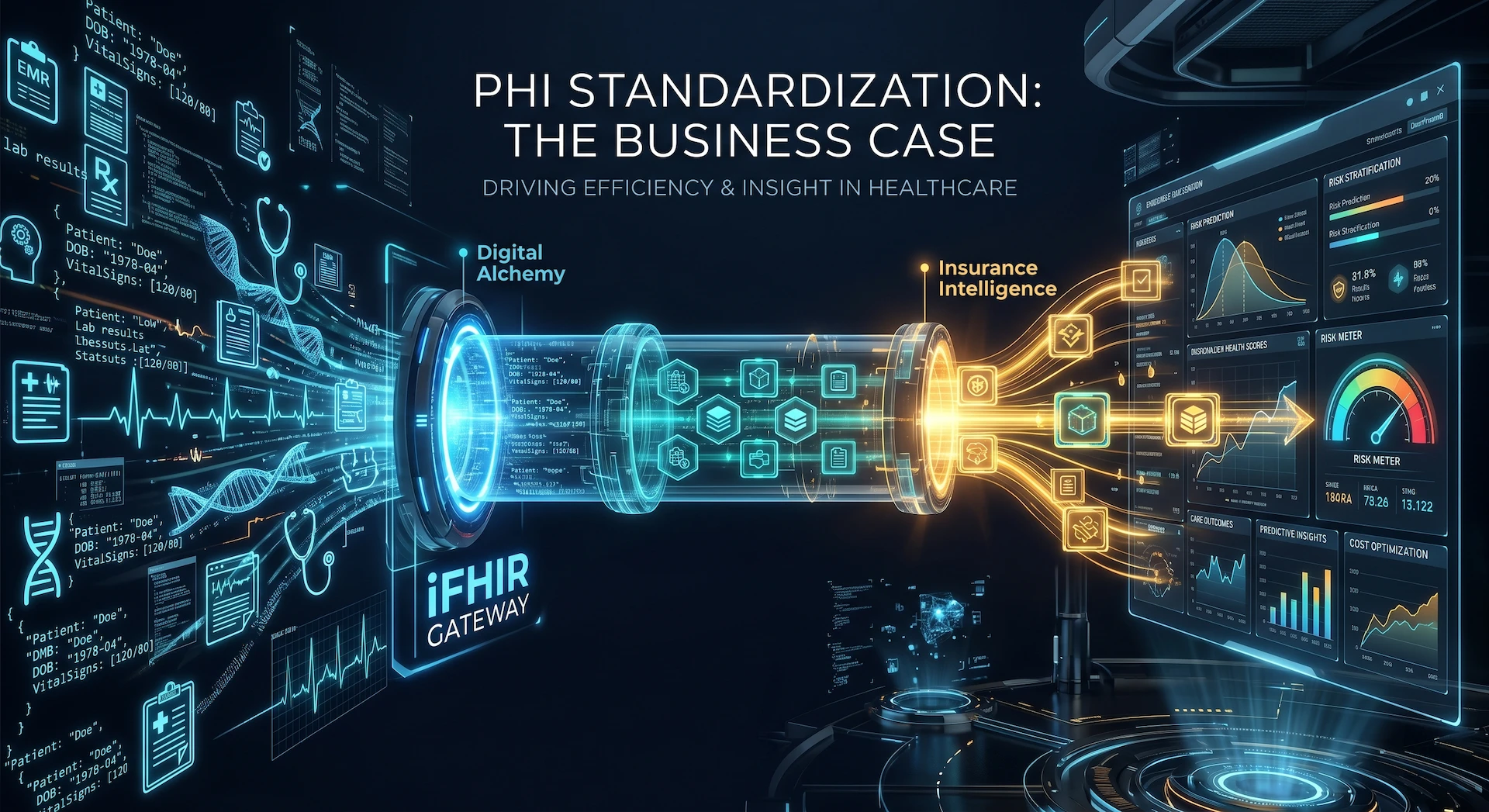
Architected a scalable healthcare data infrastructure that standardized fragmented EMR and wearable device data into FHIR R4 while redesigning progressive consent workflows to reduce PHI authorization friction and unlock data-driven underwriting and UBI insurance monetization.
Situation
Healthcare faced severe data fragmentation across hospital EMR systems and consumer wearable devices, making large-scale underwriting intelligence operationally impractical. Traditional consent flows relied on compliance-heavy authorization walls that created significant user distrust and low opt-in conversion rates for highly sensitive PHI data. At the same time, insurance applications suffered from low engagement and weak retention due to the absence of meaningful health-driven user value.
Task
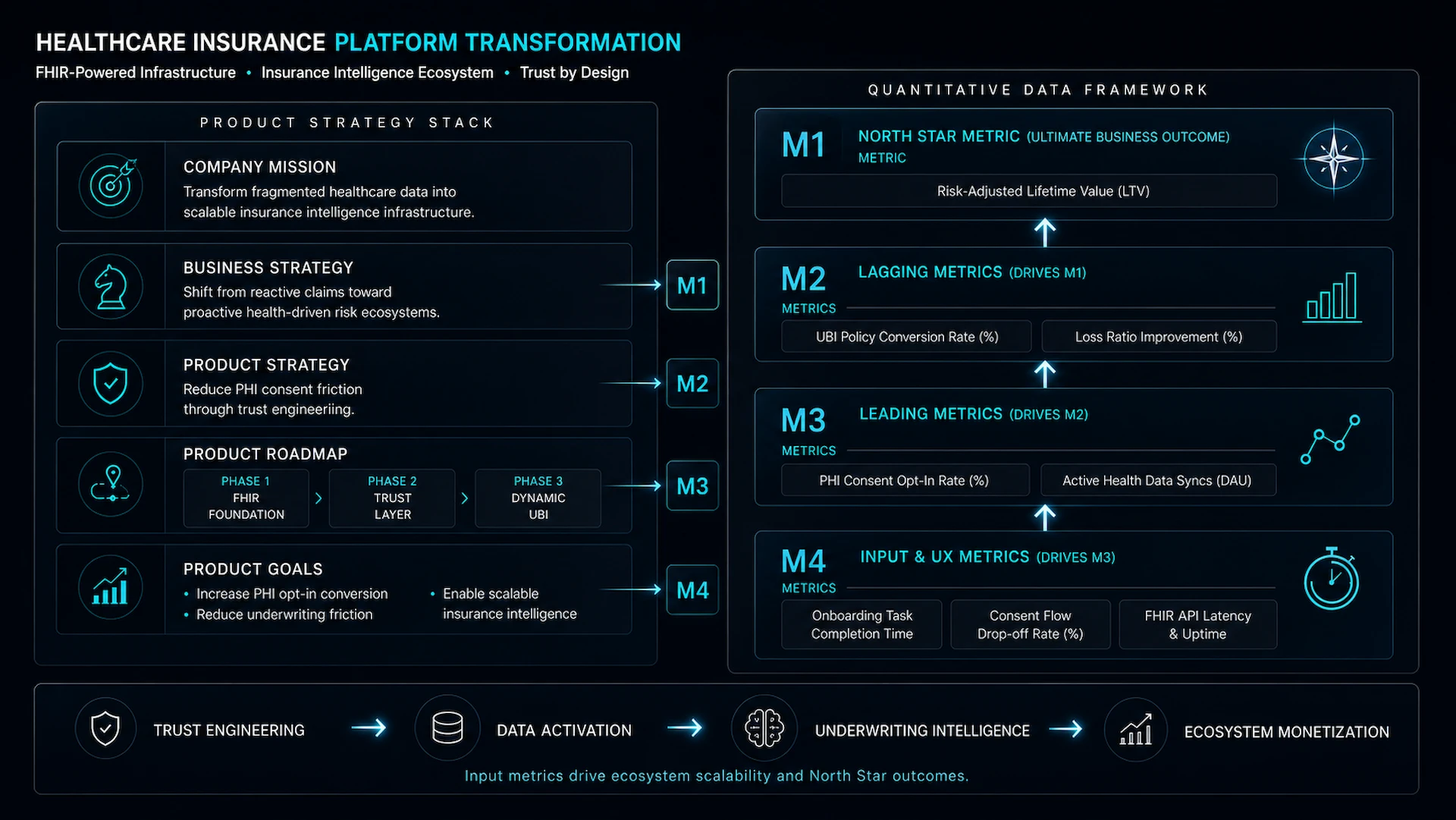
Design a scalable healthcare data platform that standardizes fragmented medical data, reduces PHI consent friction, and enables secure data-driven underwriting, dynamic pricing, and long-term healthcare ecosystem monetization.
Roles & Deliverables
FHIR-Based Healthcare Data Standardization:
Architected a centralized iFHIR gateway that normalized fragmented EMR systems and wearable device data into standardized FHIR R4 resources, enabling scalable interoperability across healthcare, insurance, and wellness ecosystems.
Progressive Consent & Trust Engineering:
Redesigned traditional compliance-heavy authorization flows into progressive consent journeys that gradually unlocked higher-sensitivity PHI permissions based on user trust accumulation and value exchange incentives, significantly reducing psychological resistance to data sharing.
Frictionless Health Intelligence Experience:
Transformed raw FHIR medical records and wearable telemetry into intuitive Health Scores, personalized recommendations, and visual health dashboards using progressive disclosure principles to minimize cognitive overload and increase long-term user engagement.
Decoupled Healthcare Infrastructure Architecture:
Separated frontend health data ingestion pipelines from core insurance systems to prevent large-scale IoT synchronization traffic from impacting underwriting and policy infrastructure performance, establishing scalable healthcare data throughput capacity.
Privacy Isolation & Zero-Trust Security Framework:
Implemented de-identification pipelines, RBAC-based access governance, immutable audit logging, and end-to-end encrypted PHI workflows to ensure compliance alignment across PDPA and highly regulated healthcare security requirements.
Strategic Trade-off:
Prioritized long-term user trust, compliance resilience, and scalable healthcare infrastructure over short-term feature velocity by investing heavily in consent architecture, security isolation, and standardized data governance before aggressive ecosystem expansion.
Result
Healthcare Trust Infrastructure:
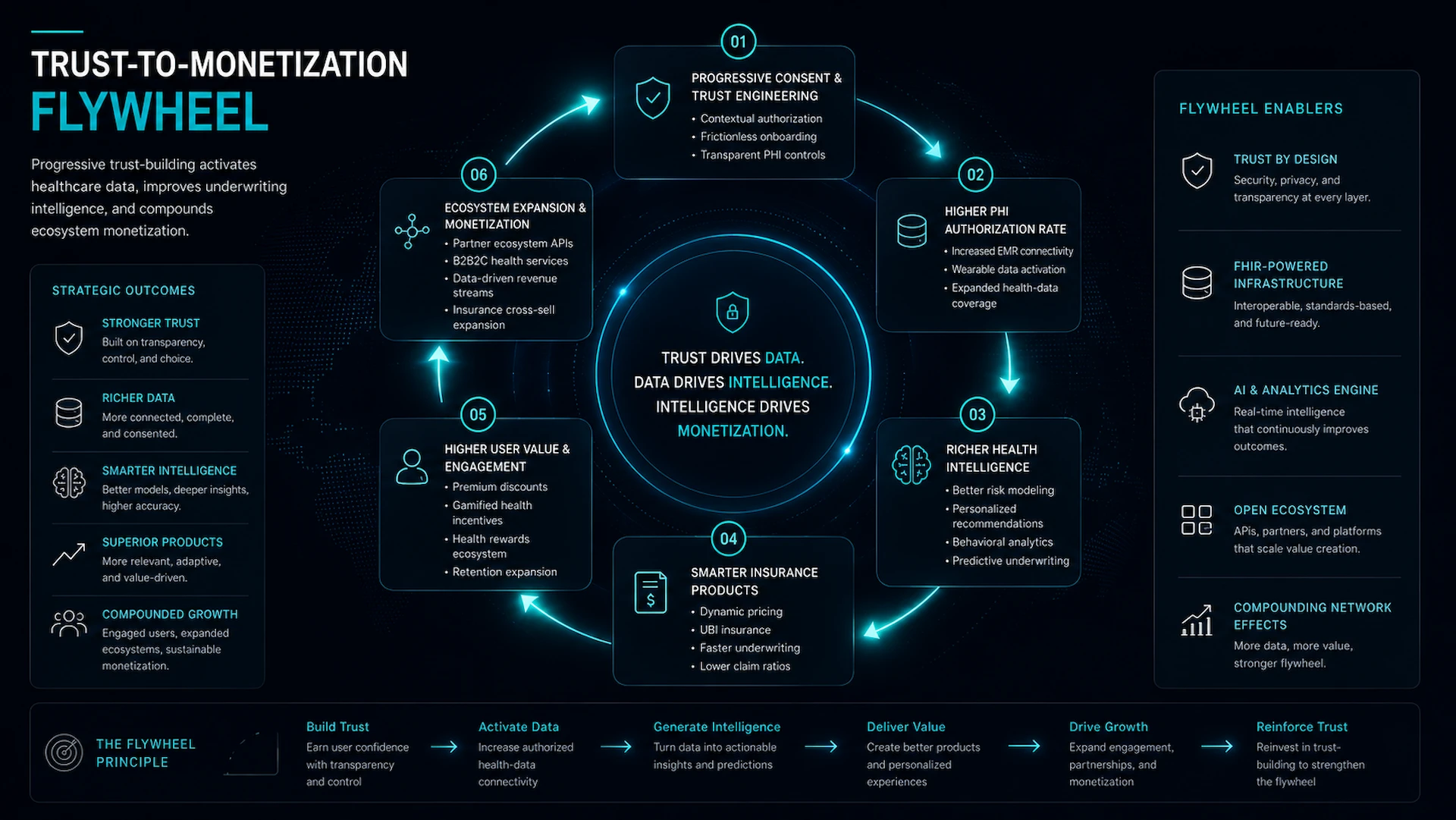
Established a scalable trust and consent architecture capable of balancing regulatory compliance, privacy protection, and long-term healthcare data monetization.
Long-Term Health Ecosystem Foundation:
Positioned the platform as future-ready infrastructure for B2B2C healthcare ecosystems spanning underwriting, wellness services, and data-driven insurance experiences.
Impact
Healthcare Data Interoperability:
- Established standardized FHIR-based healthcare data infrastructure.
- Integrated fragmented EMR and wearable ecosystems into unified underwriting-ready data pipelines.
PHI Consent Conversion Optimization:
- Reduced user resistance to sensitive healthcare data authorization.
- Orchestrated progressive trust-based consent and value-driven onboarding flows.
Scalable Insurance Intelligence:
- Enabled future data-driven underwriting.
- Optimized UBI pricing models.
- Personalized insurance recommendation systems.
Operational Risk Isolation:
- Protected core insurance infrastructure from high-frequency wearable synchronization load.
- Engineered a decoupled ingestion architecture and scalable healthcare data pipelines.