Real-Time Sportsbook Platform Scalability Transformation
Modernized real-time sportsbook infrastructure through centralized odds orchestration and self-serve operational tooling, reducing latency, maintenance overhead, and engineering dependency.
Situation
Following the 0→1 launch phase, the platform entered rapid growth and began exposing architectural bottlenecks across both operational workflows and real-time sportsbook data delivery.
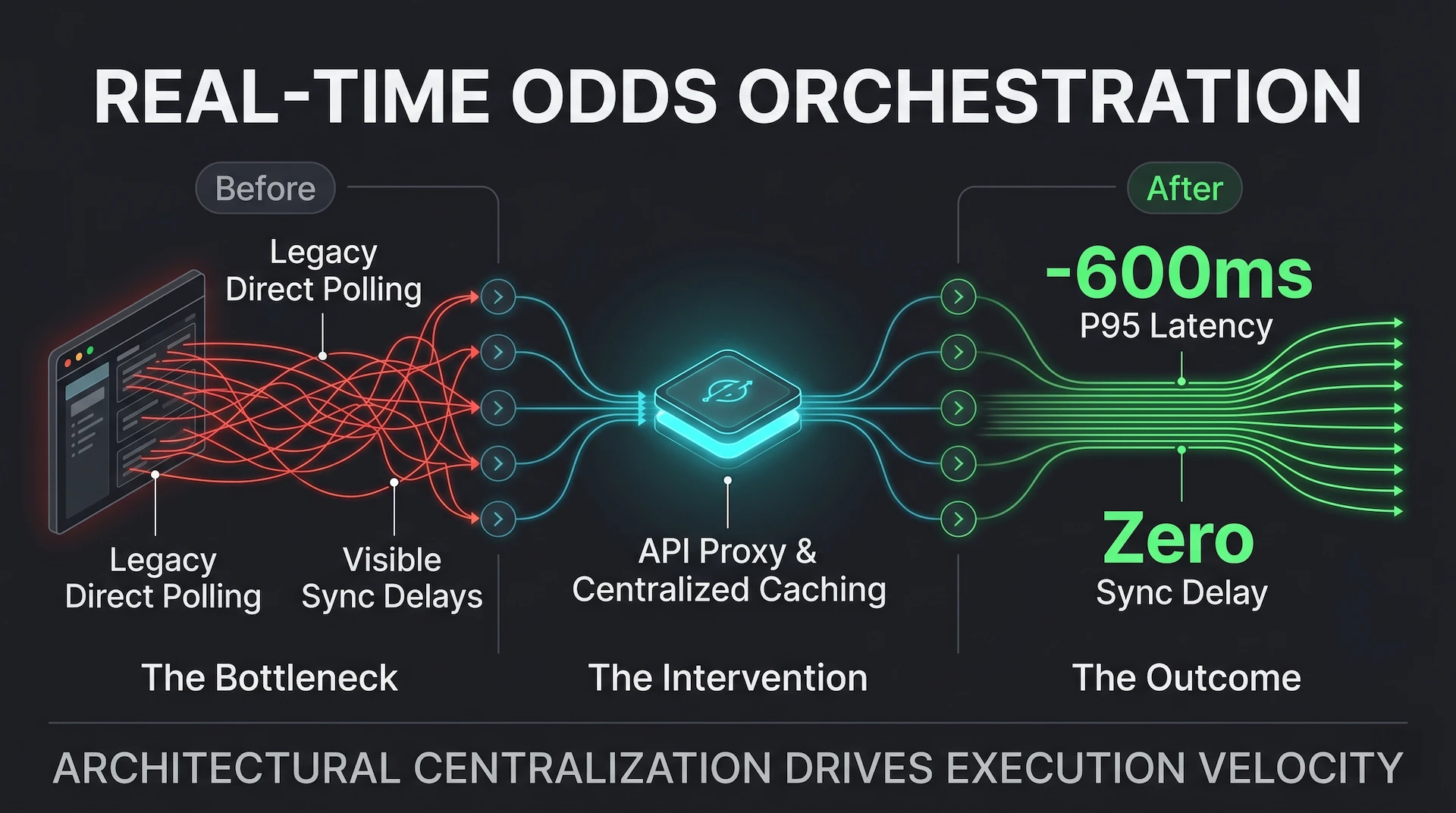
Homepage promotional updates required repeated engineering involvement, creating release bottlenecks between Operations and Engineering. Meanwhile, the sportsbook frontend relied on legacy direct polling against third-party APIs, generating excessive redundant requests during traffic spikes and causing visible odds synchronization delays on the UI — a critical trust and reliability issue in high-frequency betting environments.
Task
Architect a scalable operational platform and centralized real-time odds delivery architecture to reduce engineering dependency, eliminate synchronization latency, and support sustainable 1→10 growth.
Roles & Deliverables
Data-Driven Diagnosis:
Led telemetry and API traffic analysis, identifying uncontrolled direct polling as the root cause behind duplicate requests, synchronization instability, and infrastructure strain during live traffic spikes. Rather than treating the issue as isolated frontend latency, I reframed it as a platform orchestration and real-time delivery problem.
Re-Architected Operational Workflow Into a Self-Serve Platform:
Repurposed existing backend management capabilities instead of rebuilding a new CMS, redesigning the frontend rendering layer into a configurable operational platform. Enabled Operations teams to independently manage homepage promotional assets through backend-driven orchestration without engineering deployment support.
Redesigned Real-Time Odds Delivery Architecture:
Led the migration from direct client-side polling toward a centralized API proxy architecture with server-side caching, request deduplication, and controlled synchronization windows.
Legacy Deprecation Decision:
To accelerate delivery, I deprecated legacy support and guided early clients through migration, which proved more cost-effective than maintaining dual API architectures and accumulating technical debt.
Result
Operational Leverage:
Transformed a labor-intensive operational bottleneck into a scalable, self-serve product feature.
Technical Foundation:
Established a robust architectural foundation that significantly elevated the brand's technical credibility during its scaling phase.
Impact
Operational Scalability:
- Accelerated release preparation by over 3x.
- Reduced homepage deployment from a 3-day engineering workflow to near real-time backend configuration.
Cost Efficiency:
- Reduced ongoing system maintenance costs by 10% through frontend-only adjustments and legacy system deprecation.
Latency Elimination:
- Reduced P95 API latency by 600ms.
- Fully eliminated UI sportsbook odds update delays.